Grade 4 (CM1)
Entry into upper elementary: large numbers, first fractions, decimal numbers and finer grammar analysis (word classes and functions). A pivotal level.
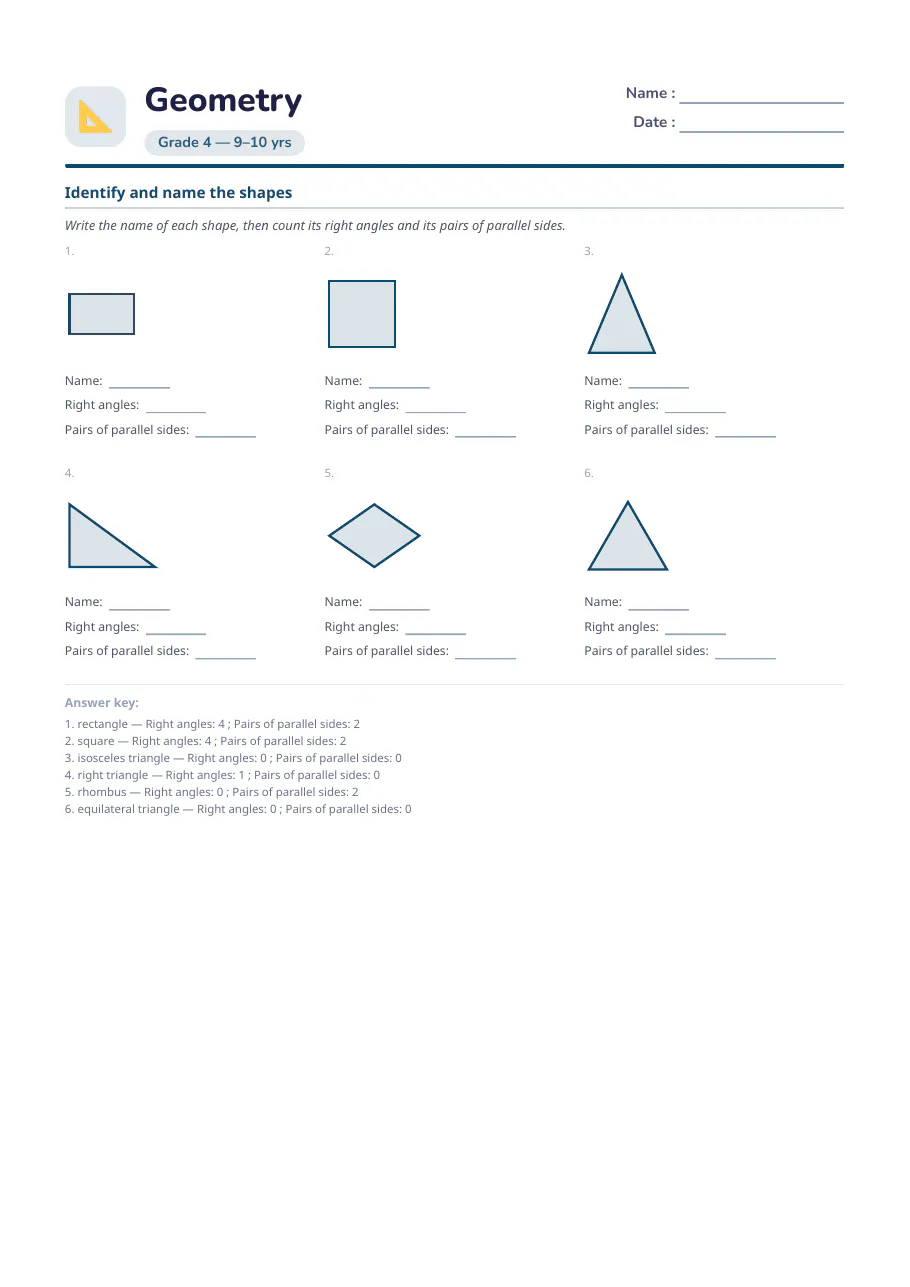
Sample worksheet
Geometry: shapes and angles
Create this worksheetSeptember – December
Large numbers and column arithmetic
Skills to build
- Read, write and compare numbers up to 100,000
- Perform multi-digit addition, subtraction and multiplication
- Identify word classes (noun, verb, adjective)
- Conjugate in the present and simple future tense
- Measure and convert lengths (mm, cm, m, km)
Recommended worksheets
One click opens the sheet: customize it, then print it as a PDF.
January – March
Introduction to fractions
Skills to build
- Understand simple fractions (1/2, 1/4, 1/3…)
- Place a fraction on a number line
- Solve two-step word problems
- Spell common homophones correctly (a/à, et/est…)
- Expand vocabulary through word families
Recommended worksheets
One click opens the sheet: customize it, then print it as a PDF.
April – June
Decimal numbers and geometry
Skills to build
- Discover and read simple decimal numbers
- Calculate the perimeter and area of simple shapes
- Conjugate in the passé composé (present perfect)
- Get a first introduction to proportionality
- Confidently prepare for Grade 5
Recommended worksheets
One click opens the sheet: customize it, then print it as a PDF.
Go further
Frequently asked questions
Which worksheets does the site offer for fourth grade (CM1)?
In math: fractions, decimal numbers, proportionality, column arithmetic (multiplication and division), mental math, measurements, geometry and word problems. In English: spelling, vocabulary and reading comprehension; in French: conjugation and grammar. Each generator has a Grade 4 level.
My child struggles with fractions: how can I help?
Start with concrete things: sharing a pizza or a chocolate bar, folding a paper strip into equal parts, before moving to written fractions. Link them to everyday life (a quarter of an hour, half a litre), then practise with the fraction worksheets in short sessions.
Does this curriculum match official school programs?
Yes, the term-by-term progression follows the broad outline of the French national curriculum and works as a useful benchmark for families anywhere. You can adapt the pace to your child's needs.
What if my child is ahead of or behind this curriculum?
This guide is a benchmark, not a requirement. If your child moves faster, feel free to check out the next level. If they need more time on a topic, revisit the previous term's worksheets without pressure.
Useful? Share it with other parents