Preschool (PS)
Pencil discovery, pre-writing and first letters. Main goal: make your child want to write through play.
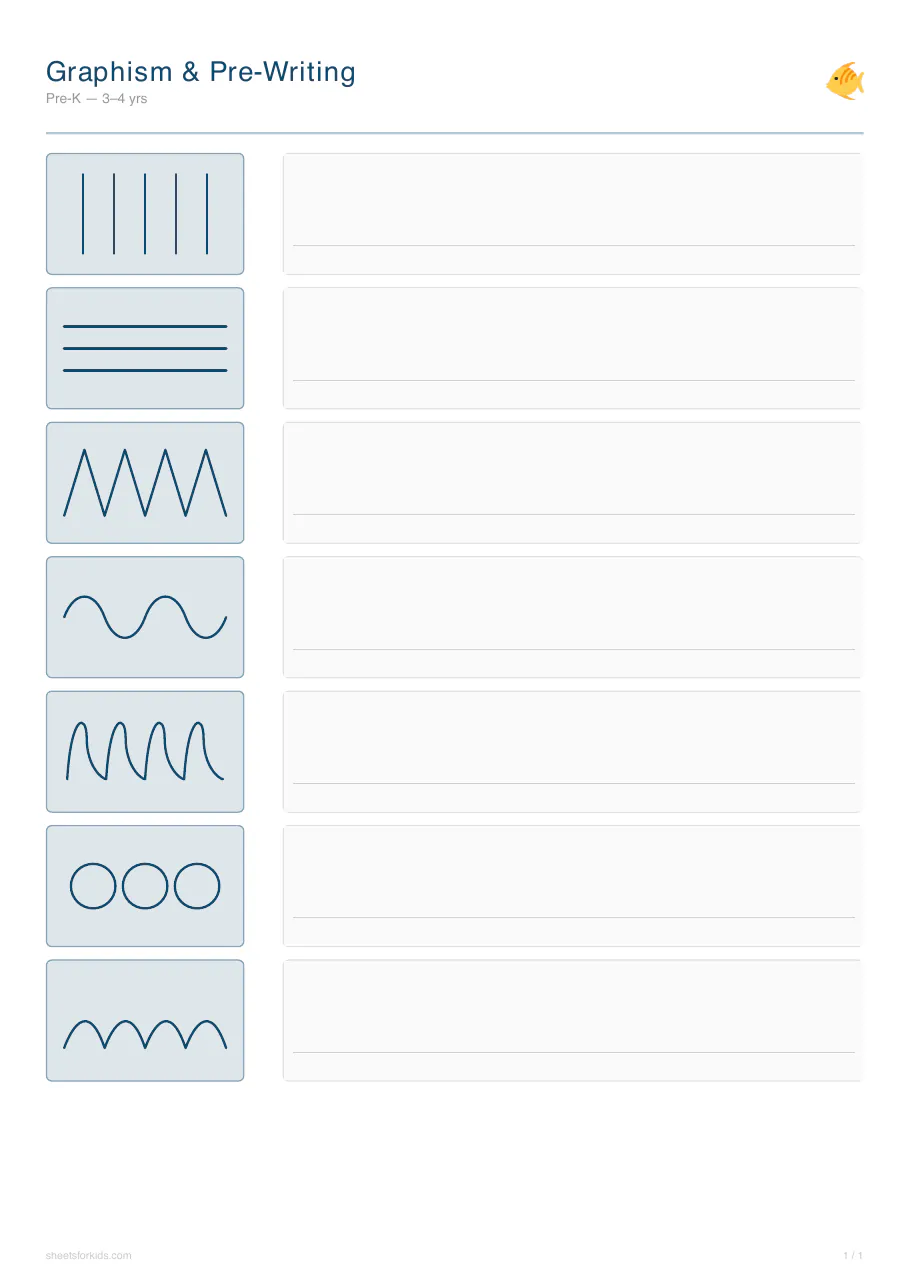
Sample worksheet
Graphism and pre-writing
Create this worksheetSeptember – December
Pre-writing & pencil grip
Skills to build
- Trace straight lines, curves and loops
- Recognize basic geometric shapes
- Hold pencil correctly (pincer grip)
- Count everyday objects up to 3
- Recognize and name primary colors
Recommended worksheets
One click opens the sheet: customize it, then print it as a PDF.
January – March
First letters & name tracing
Skills to build
- Recognize uppercase alphabet letters
- Trace the letters of their name in uppercase
- Count and recognize numbers up to 5
- Sort and classify objects by shape and size
- Develop visual memory (matching games)
Recommended worksheets
One click opens the sheet: customize it, then print it as a PDF.
April – June
Independent name writing & routine
Skills to build
- Write their name independently without model
- Count to 10 using fingers
- Follow a visual routine independently
- Color within simple outlines
- Participate in small household tasks
Recommended worksheets
One click opens the sheet: customize it, then print it as a PDF.
Frequently asked questions
Does my child need to write their name in the first year of preschool?
No. At age 3-4 the child mainly learns to recognise their name and to hold a pencil. They copy it with help, often in capital letters, and the movement becomes independent later on. Guided name tracing is a good activity, a few minutes at a time.
How long should we do worksheets at home each day at age 3-4?
Five to ten minutes is enough, once or twice a day at most. At 3-4 attention is short: vary the activities (pre-writing, shapes, rhymes) and stop as soon as your child loses interest.
Does this curriculum match official school programs?
Yes, the term-by-term progression follows the broad outline of the French national curriculum and works as a useful benchmark for families anywhere. You can adapt the pace to your child's needs.
What if my child is ahead of or behind this curriculum?
This guide is a benchmark, not a requirement. If your child moves faster, feel free to check out the next level. If they need more time on a topic, revisit the previous term's worksheets without pressure.
Useful? Share it with other parents