Grade 3 (CE2)
Complete multiplication tables, introduction to division, and multi-digit arithmetic. A key level for building solid foundations before middle school.
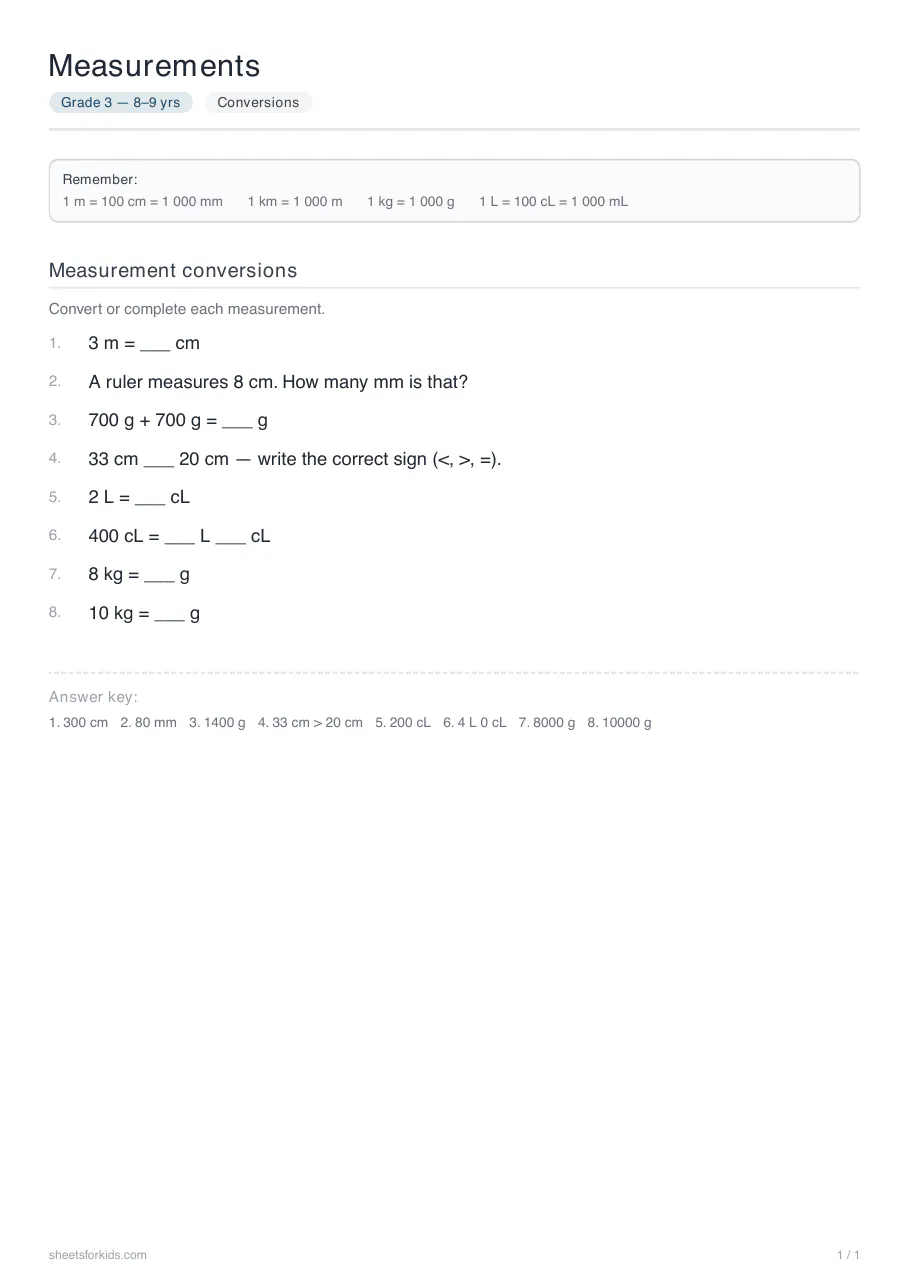
Sample worksheet
Measurement conversions
Create this worksheetSeptember – December
Times tables ×6 to ×9
Skills to build
- Memorize ×6, ×7, ×8 and ×9 times tables
- 3-digit addition and subtraction
- Mental math: 20 daily exercises
- Fluent reading: at least 70 words per minute
- Solve 6×6 sudoku (logic and focus)
- Language: conjugate verbs, identify word classes, make agreements within the noun phrase
- Money and measures: make change, convert units
Recommended worksheets
One click opens the sheet: customize it, then print it as a PDF.
January – March
Division & written multiplication
Skills to build
- Division with whole quotients (no remainder)
- Written multiplication by 1 digit
- Solving math word problems
- Write a 3-5 sentence text with punctuation
- Manage schedule and homework independently
Recommended worksheets
One click opens the sheet: customize it, then print it as a PDF.
April – June
Full tables review & organisation
Skills to build
- Review all multiplication tables ×2 to ×12
- Mixed mental math: +, -, ×, ÷
- Independently organize school week
- Solve multi-step word problems
- Confidently prepare for Grade 4
Recommended worksheets
One click opens the sheet: customize it, then print it as a PDF.
Go further
Frequently asked questions
What reading speed is expected at the start of third grade (CE2)?
The official September benchmarks aim for about 70 words read correctly per minute. Between 50 and 69 reading is considered fragile, and below 50 the child needs extra support. It is a monitoring benchmark, not a grade: progress and comprehension are what matter.
When should my child learn the 6 to 9 multiplication tables?
In third grade, once the 2, 3, 4, 5 and 10 tables are solid. Go one table at a time, building on what the child already knows (6 × 7 = 7 × 6; 9 × n = 10 × n − n) and review them for 5 minutes every day.
Does this curriculum match official school programs?
Yes, the term-by-term progression follows the broad outline of the French national curriculum and works as a useful benchmark for families anywhere. You can adapt the pace to your child's needs.
What if my child is ahead of or behind this curriculum?
This guide is a benchmark, not a requirement. If your child moves faster, feel free to check out the next level. If they need more time on a topic, revisit the previous term's worksheets without pressure.
Useful? Share it with other parents